
“Pressure is a privilege.”
—Billie Jean King
What’s Your Juice? Unlock the Energy that Transforms Performance, Fuels Purpose, and Ignites the People Around You is now available on Amazon! Get your copy now!
It was October 17, 1814. A thunderous crack echoed through the streets of London near Tottenham Court Road. Then came a roar.
A massive wooden barrel holding over 135,000 gallons of beer had ruptured at a local brewery. The explosion, caused by intense internal gas pressure, had triggered a chain reaction. Seven more vats burst open and within minutes a fifteen-foot wave of beer came crashing through a densely populated and impoverished area of St. Giles.
It sounds comical until the details unfold. The tragedy was not the lost beer. Buildings collapsed, walls buckled, and eight people died.
The “London Beer Flood” was deadly and it happened because pressure wasn’t managed properly. Pressure, left unchecked, destroys—buildings … and people.
Tragedies repeated throughout the 1800s as steam engines multiplied across the world. Steam power would be pushed beyond safe limits and the results were catastrophic. Trains exploded mid-route, boilers launched into the air like missiles, and buildings were leveled.
The most tragic example happened in 1865 on the Mississippi River. The steamboat Sultana was running on faulty boilers, pressure built until the vessel exploded. The boat was designed for 376 passengers, but was carrying over 2,000. The result was around 1,200 recently freed Union prisoners of war died. It was one of the deadliest maritime disasters in U.S. history.
Pressure is powerful, explosive, and loud. In 1883, volcanic pressure inside the Indonesian island of Krakatoa built to unthinkable levels. When it finally gave way, the explosion was heard 3,000 miles away, making it the loudest sound in recorded history. Two-thirds of the island was obliterated. The shockwave circled the globe four times and windows shattered in distant countries.
Pressure, when it has nowhere to go, becomes a weapon of mass destruction. This is the case for us as humans. We all know too many examples of this being true. When pressure brings us to a breaking point, we burst. Sometimes internally, other times outwardly. When left unchecked, pressure is deadly. This is why we must all have mechanisms, outlets, and resources to properly manage pressure.
Because, when managed, pressure is also one of the most powerful creative forces in the universe.
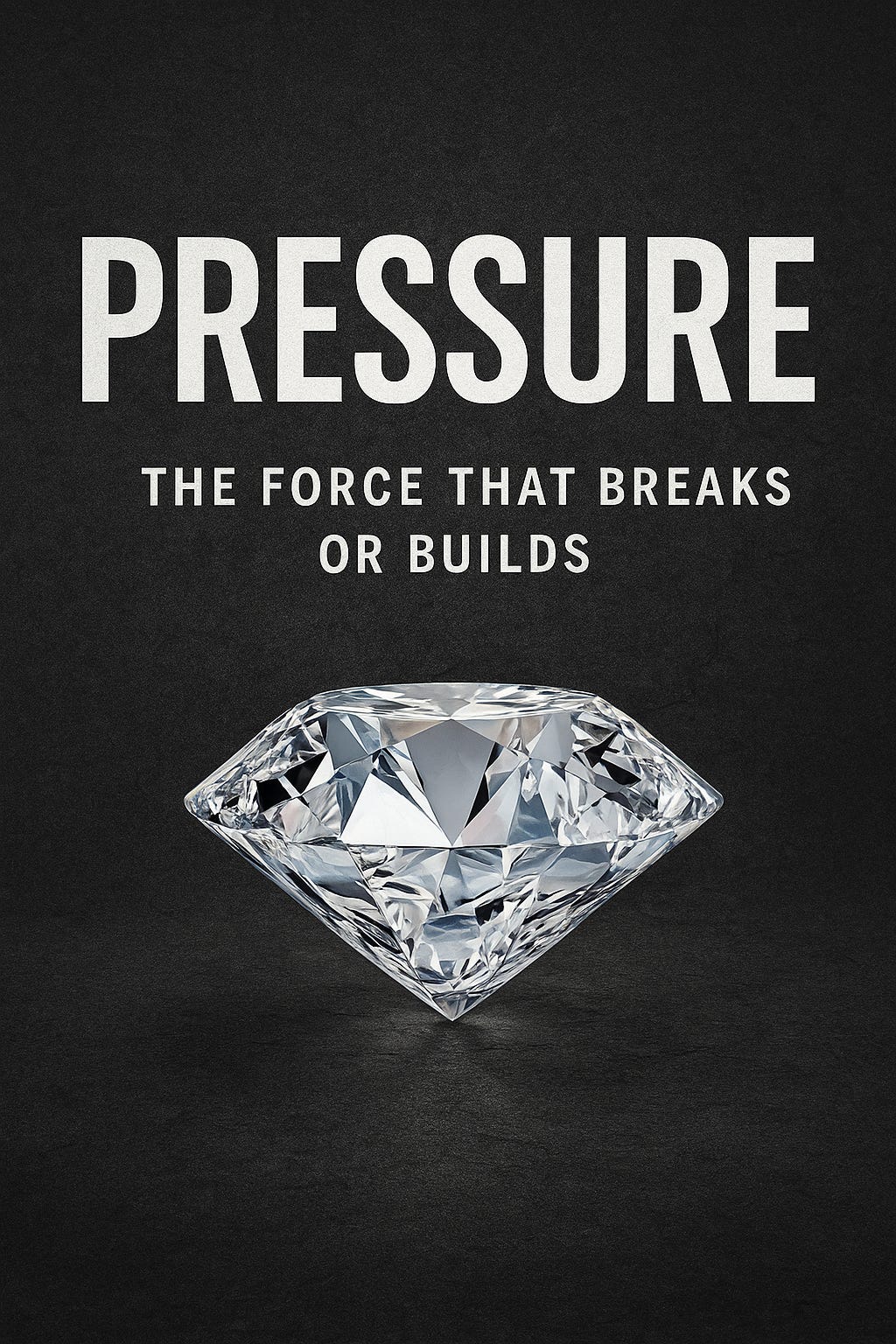
We all know a diamond starts as ordinary carbon, the same material in a pencil. But under the immense heat and crushing pressure of the Earth, that carbon transforms into something extraordinary. The pressure crystallizes the carbon into diamonds.
Mountains form in a similar way. The Rockies exist because tectonic plates collided with relentless pressure, pushing the Earth into the sky. Without that force, there would be no Grand Tetons.
The list goes on. Even plywood depends on pressure. Thin layers of wood, arranged and compressed under heat, become stronger than solid lumber. The pressure makes the material more resilient.
In many cases, the difference between destructive pressure and transformative pressure isn’t the force itself. It’s having a structure to channel it. That’s where coaching and leadership lives.
The greatest leaders in history—Lincoln navigating a divided nation, Churchill rallying Britain during the Blitz, Mandela emerging from 27 years in prison ready to unite rather than divide—all faced crushing pressure. They had the purpose, structure, and the capacity to direct that force toward something meaningful.
The same principle shows up time and again in the world of sports. The athlete who crumbles in the final seconds and the one who delivers in the clutch experience the same pressure.
One finds a way to channel the pressure of the moment and the other lets it explode.
This is important at the personal level, and as a leader of others. How will you build and prioritize systems that can handle pressure?
Or are you one crack away from catastrophe?
The pressures of life will come, it always happens. We can’t eliminate pressure. But we can prepare for it. Pressure will destroy or it will create.
Focus on the the habits, the mindset, the energy—your juice—that turns a crushing force into one of the most powerful and creative forces possible. Surround yourself with people who won’t buckle when things get hard. Create a culture where pressure creates for breakthroughs instead of breakdowns.
Pressure won’t care about your intentions. You get to decide that.
“The ultimate measure of a man is not where he stands in moments of comfort and convenience, but where he stands at times of challenge and controversy.”
— Martin Luther King Jr.
Connecting this quote to the story. The story gave examples of the explosive power of pressure. It also showed the value of pressure, especially how great leaders, coaches, and athletes find the strength, integrity, and resilience needed when the pressure is on and the stakes are highest.
This week’s Chasing Influence tip: The best leaders find a way to turn pressure into direction rather than reaction.