

“If you don’t stand for something, you’ll fall for anything.”
— Traditional proverb
Chasing Influence: Transformational Coaching to Build Champions for Life and What’s Your Juice? Unlock the Energy that Transforms Performance, Fuels Purpose, and Ignites the People Around You are available on Amazon and Audible!
There is no Park
One of my favorite parts of the job happens before the first bell. Transportation falls under my responsibilities, and whenever I can, I’m there when the buses roll in. They come up one after another and ease to the curb. Then the doors fold open and out they come. No matter the age, every one of them is showing up for another day and whatever it’s going to hold.
If you watch closely, there’s a cadence that happens just before those doors open. The driver shifts into Neutral and sets the parking brake. It takes about two seconds. Most kids never notice it. For a long time, neither did I.
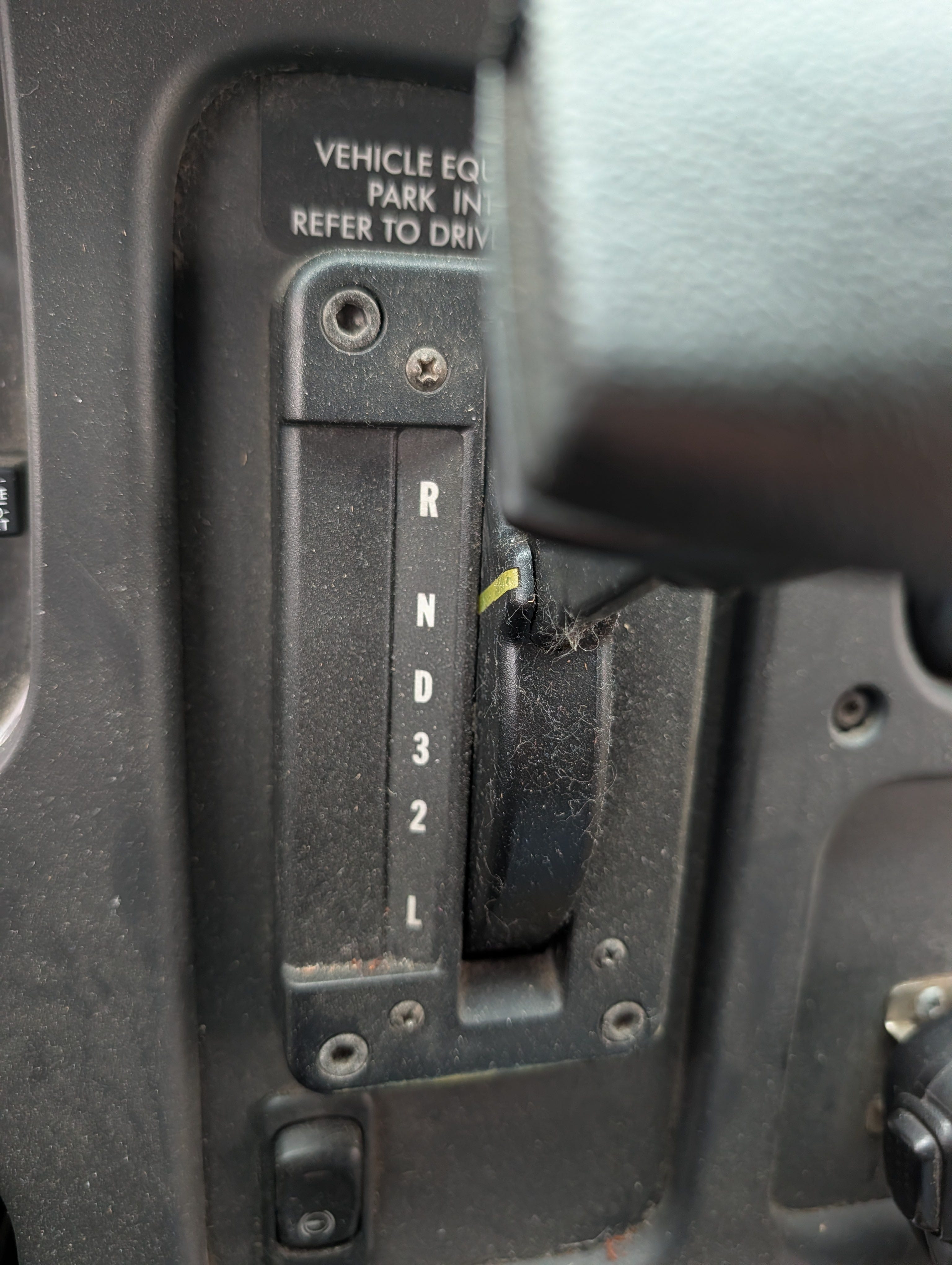
Most buses don’t have Park. Look at the shifter and you’ll find R, N, and D. That’s the whole menu. Neutral by itself holds nothing. On flat ground, that’s fine. On the slightest grade, Neutral just means gravity wins. The brake is what keeps a bus where it belongs, which is why setting it is a habit every driver is trained to repeat every time the doors open.
I’ve been on a lot of buses, and I’d never noticed the missing letter. I assumed a bus worked like my car, because nearly everything I drive works like my car. Stop, push the lever to P, take your foot off the brake. Most of us have done it ten thousand times without a thought.
Ask a veteran driver about Neutral and the brake, though, and you’d probably get the look you’d get for asking whether the bus needs gas. It’s so obvious to them it hardly seems worth saying. That’s the problem with obvious. Once you know something well enough, you lose the ability to remember what it was like not to know it.
Psychologists call this the curse of knowledge. In 1990, a Stanford graduate student named Elizabeth Newton asked people to tap out the rhythm of well-known songs on a tabletop, “Happy Birthday” among them, while a listener tried to name the tune. The tappers predicted listeners would get about half. Listeners got 3 out of 120. The tappers heard the melody in their heads the whole time. The listeners heard knocking.
I’ve been on the tapping side of that table plenty, and many of those times happened coaching. I’ve coached thousands of baseball games by now, and probably played in another thousand. The fundamentals live so deep in me that I don’t think about them anymore. Run hard through the bag at first. Know the situation before every pitch. Hit the cutoff man. So when a young outfielder misses the cut and gives up an extra base, my first instinct is that he wasn’t paying attention.
That’s usually when I hear my dad. He has a rule for coaching, teaching, or telling a story. Assume they know nothing.
It sounds a little insulting the first time you hear it. Live by it long enough and it turns out to be one of the most generous things you can do for someone. You start where they are, which is almost never where you are. You teach the skill and the reason behind it: miss the cutoff man, and the runner moves up a base and into scoring position for free. You say the part that feels too obvious to say. And when the kid nods along at the first practice, you remember the nod might just mean he’s being polite.
Now, when I climb onto one of our buses, my eyes go to the shifter first. R, N, D. I still look for the P.
Somewhere in your program, there’s a P that isn’t there. Something you know so well you’ve stopped saying it … and someone new is looking for it.
“Once we know something, we find it hard to imagine what it was like not to know it.”
— Chip Heath and Dan Heath, Made to Stick: Why Some Ideas Survive and Others Die
Connecting this quote to the story. Great leaders, coaches, and teachers overcome the curse of knowledge by remembering that what is second nature to us may be entirely new to those we're trying to reach.
This week’s Chasing Influence tip: Don’t confuse what you've explained with what others have understood. Great leaders teach, coach, and communicate from the perspective of their audience, not their own expertise.