

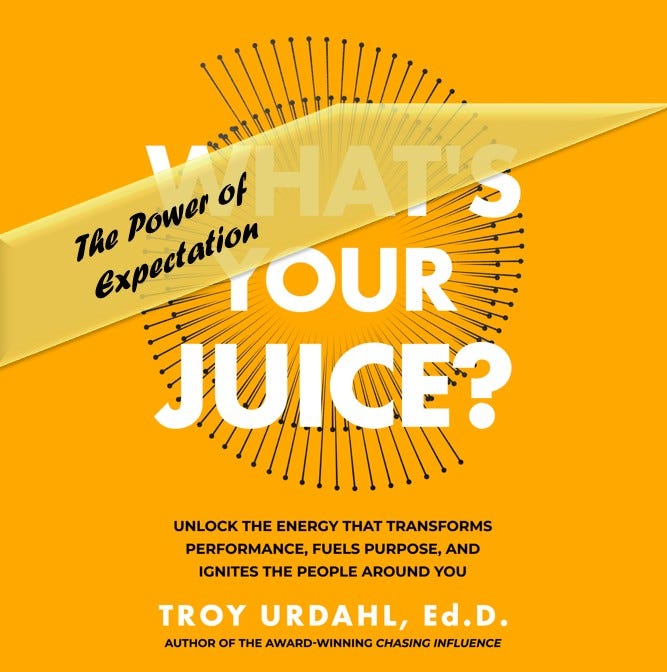
Your expectations shape outcomes. The juice you carry—whether conscious or unconscious—impacts the people around you. This assessment will help you reflect on how your beliefs about others influence their performance, motivation, and growth.
Instructions
Be honest with yourself—this assessment is a tool for growth, not judgment. Rate each statement on a scale of 1-5:
1 = Never / Strongly Disagree
2 = Rarely / Disagree
3 = Sometimes / Neutral
4 = Often / Agree
5 = Always / Strongly Agree
Section 1: Self-Awareness and Energy Management
____ I’m aware of how my mood affects others when I enter a room.
____ I can identify my emotional triggers before they impact my behavior.
____ I notice when my energy levels are affecting my interactions.
____ I consciously manage my body language in different situations.
____ I recognize when my expectations of others are influencing my actions.
Section 2: Social Awareness and Relationship Management
____ I can accurately read the emotional climate of a group.
____ I adapt my communication style based on others’ needs.
____ I actively look for and reinforce others’ potential.
____ I create conditions that help others succeed.
____ I’m mindful of how my expectations might limit others.
Section 3: Energy Leadership and Impact
____ I consciously project energy that elevates those around me.
____ I maintain positive expectations even when facing challenges.
____ I notice when my presence is either energizing or depleting others.
____ I take responsibility for the emotional tone I set.
____ I deliberately work to build others’ confidence and capabilities.
Scoring and Interpretation Guide
Add your scores from all 15 questions:
75-65: EI Master
You demonstrate exceptional awareness of your juice’s impact on others and skillfully manage both your own and others’ emotional states. Your presence consistently elevates those around you. Focus on teaching these skills to others.
64-50: EI Builder
You show strong awareness of emotional dynamics and generally manage your impact well. Continue developing your ability to consciously direct your juice in challenging situations.
49-35: EI Developer
You have a foundation of emotional intelligence but may not consistently apply it. Work on becoming more intentional about your juice’s impact and expectations of others.
34-20: EI Novice
You’re beginning to recognize the importance of emotional intelligence. Focus on building self-awareness and understanding how your juice affects others.
Below 20: EI Unconscious
You may be unintentionally limiting your effectiveness through lack of awareness about your emotional impact. Prioritize developing your emotional intelligence skills.
Reflection Questions
Who is a person in your life who could benefit from more positive expectations from you?
In the next week, how can you amplify belief in someone’s potential?
What action can you take to reinforce positive expectations in your daily interactions?
Next Steps: Growing Your Emotional Intelligence
Based on your lowest-scoring areas, choose two to three specific behaviors to practice this week:
Practice power poses (confident body positions like hands on hips or arms raised) before important interactions.
Actively look for potential in those you’ve previously underestimated.
Monitor your body language during challenging conversations.
Experiment with different ways of expressing confidence in others.
Your expectations create reality. The juice you bring into a room will either elevate or limit those around you. What will you choose?
Review this assessment monthly to track your progress and identify areas for continued growth.
This assessment is intended as a reflective and developmental reference tool, designed to offer insights into energy patterns and influence dynamics. It is not a clinical, psychological, or psychometric assessment, nor has it undergone formal clinical validation or testing. Results should be interpreted as guidance for self-awareness and growth, rather than as diagnostic conclusions.