

“You can observe a lot by just watching.”
—Yogi Berra
Chasing Influence: Transformational Coaching to Build Champions for Life and What’s Your Juice? Unlock the Energy that Transforms Performance, Fuels Purpose, and Ignites the People Around You are available on Amazon and Audible!
The Only One Facing the Other Way
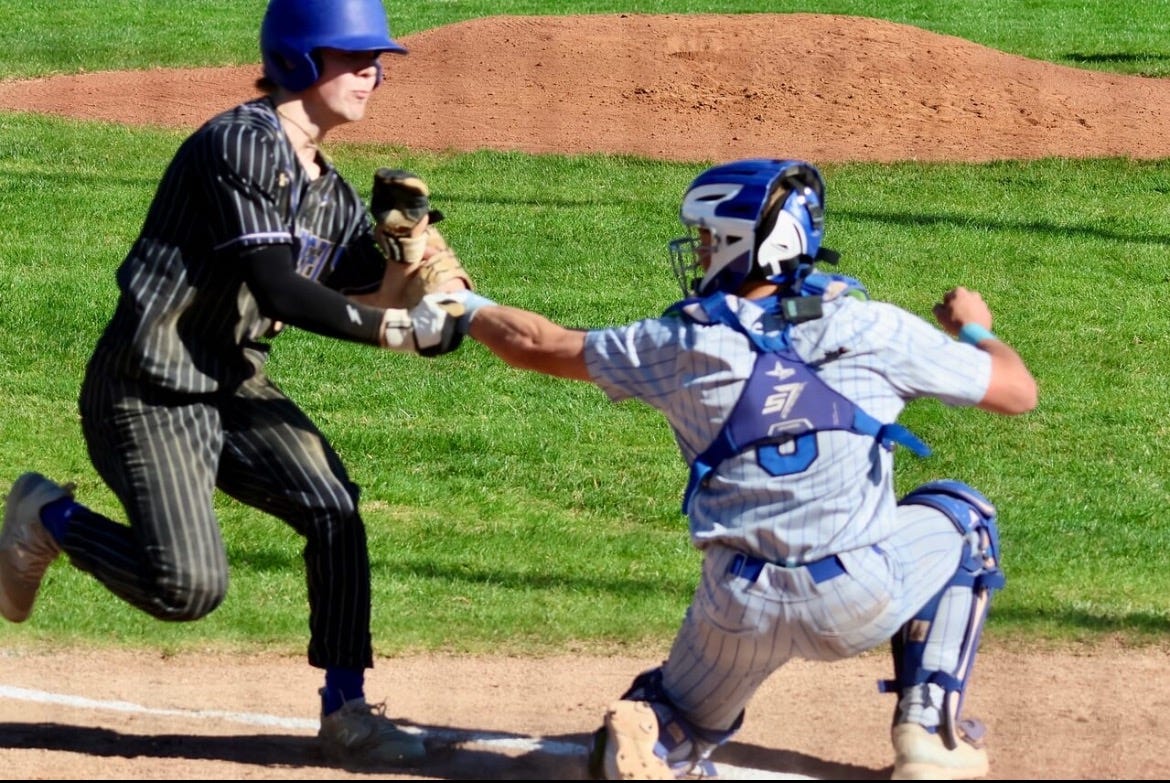
Sit behind the backstop at any ballgame and watch the field for a minute. Eight of the nine players on defense are looking the same direction—toward the plate, hoping for the ball to come to them. There is one player looking the other way. The catcher crouches in the dirt facing all of it … the pitcher, infield, baserunners, the whole diamond. The catcher is the only person out there who spends the entire game looking at everybody else.
My wife and I have raised four kids, and two of them spent a lot of time back there, strapped into what baseball players have long-called the tools of ignorance—the mask, the chest protector, the shin guards. It’s one of the great misnomers in sports. The phrase is frequently credited to a catcher named Muddy Ruel, who caught for the old Washington Senators and was also a practicing lawyer, smart enough to be admitted before the U.S. Supreme Court. The joke was that you’d have to be a little crazy to buckle on all that gear and kneel behind a swinging bat while baseballs and spikes and bodies come flying at you. You’d have to be nuts to do it!
I’ve come to think Ruel had it backward. Those are the tools of wisdom.
A few years back, the Harvard Business Review looked at how organizations actually produce leaders and investigated, of all things, baseball. At the start of the 2008 season, twelve of the thirty men managing Major League teams had once been catchers. On a twenty-five-man roster, maybe two or three players ever put on the gear, and catching is one of nine spots on the field—yet nearly half the game’s managers came up from behind the plate. The odds of that happening by accident are worse than one in a thousand. Something about the position makes leaders.
Maybe it starts with what the catcher sees. Everyone else is locked in on the hitter, minding their own patch of grass and their own job. The catcher has to capture everything at once—the pitcher’s body language, the shortstop drifting a step too far, the runner sneaking an extra foot off first, the count and the score and the inning, what pitch was just thrown and what should come next and where all eight teammates need to be the instant the ball’s in play. Not to mention the presence of an umpire right behind. The catcher can’t afford to only focus on him/herself. The catcher has to watch and focus on everybody.
That runs against nearly everything a kid absorbs growing up. We raise them in a world built to aim their attention inward … how am I doing, look at my stats, did I get enough playing time, did anybody notice me. A catcher doesn’t get to spend much time with those questions. The job hands them the opposite questions instead … who needs a word right now, who’s out of position, what does the team need from me this inning. Those turn out to be pretty good questions for how to live a life.
Catchers also learn something that has nothing to do with catching a baseball. Pitchers on the mound sometimes come apart, and reading them is part of the job. Some days you jog out there, put a hand on his shoulder, and tell him you’ve got him. Other days you look him in the eye and tell him to quit feeling sorry for himself and throw the ball. The good ones learn to tell the difference—when a person needs grace and when he needs a push, when to settle someone down and when to call them up. Miss it in either direction, and you lose them. That same read runs through every classroom, every team, and every kitchen table where somebody’s trying to draw the best out of somebody else.
There’s one aspect of catching I love. A pitch skips in the dirt five feet short of the plate. The catcher doesn’t point at it, doesn’t stand up and glare at the pitcher for missing the spot. They drop to their knees and get their body in front of it before it can scoot to the backstop and hand any runners a free base. Somebody else made the mistake, and yet the catcher’s instinct is to move toward it and keep it from getting worse. A lot of leadership looks exactly like that. Something goes sideways, and instead of asking whose fault it is, you shoulder the accountability, get down in the dirt, and take the brunt of it all.
Catchers get beat up. They call the wrong pitch. They get crossed up. They take foul tips off places that really hurt. They get run over at the plate. Then the umpire flips a fresh ball out to the mound, the catcher settles back into their crouch, and the game just keeps going.
Next pitch.
None of us gets the version of life where that doesn’t happen. You’re going to get hit. You’ll make the wrong call, back the wrong plan, put your trust in the wrong person. Someone will let you down, you’ll let yourself down, and a good share of it won’t be fair. You don’t have to pretend it didn’t sting. But at some point you put the mask back on, get back in the crouch, and call the next one.
And none of it requires the gear. You don’t have to be young, or a ballplayer, or strapped into anything to catch. The posture is available to any of us, in any room we walk into. Most people move through their days like the other eight on the field—head down, locked on their own patch of grass, keeping an eye on their own line in the box score. The catcher turns around and faces everybody. So can we.
We can be the ones who take in the whole field instead of just our piece of it, who read the person in front of us and know whether they need an arm around the shoulder or a kick in the pants. And when a ball skips to the backstop through no fault of our own, we can be the one who runs after it anyway.
My wife and I tried to raise four kids who’d live like that, and I hope we did. But I’ve stopped thinking of it as something we hand down only to children. The people I most want beside me—at work, on a staff, in a marriage, at the kitchen table—are the ones who play life like a catcher. And if I’m honest with myself, it’s the person I most want to be, too.
This weekend is a good time to sit with that. Labor Day belongs to the people who do the work. Some of them clock back in Monday to a classroom or a locker room full of somebody else’s kids. Most of us just clock back in—to a job, a team, a household that needs at least one person watching the whole field instead of only their own. The catcher’s kind of work rarely makes a headline. It’s the work that holds things together.
So be a catcher. You don’t need the gear. Be the one who turns around and sees everybody else, who moves toward the mess instead of pointing at it, who takes the hit and reaches for the mask anyway. That was never ignorance … it’s wisdom … and the world could use a lot more people willing to crouch down and catch whatever’s coming.
Where in your life could you turn around and start facing everybody else?
“We cannot always build the future for our youth, but we can build our youth for the future.”
— Franklin D. Roosevelt
Connecting this quote to the story. Our greatest responsibility as parents, coaches, and leaders is not to make life easier for young people, but to prepare them with the character, resilience, awareness, and selflessness they’ll need to shape a better future.
This week’s Chasing Influence tip: Teach people to handle the next pitch, not fear the last one.