
“You’ve always had the power, my dear. You just had to learn it for yourself.”
— Glinda the Good Witch
Chasing Influence: Transformational Coaching to Build Champions for Life and What’s Your Juice? Unlock the Energy that Transforms Performance, Fuels Purpose, and Ignites the People Around You are now available on Amazon and Audible!
Staring Out the Window
Every one of us knows someone who seems to have an answer for everything that’s wrong in their life. The boss. The refs. Their childhood. Their luck. Their teammates. The economy. Maybe, if we’re honest, sometimes that person is us.
We’ve all looked through the window and found someone or something else to blame for where we are, how we feel, or why things didn’t work out. And to be fair, sometimes the world is unfair. Bad breaks happen, people let us down, and circumstances can be incredibly difficult.
But if it’s always someone else’s fault, you’ll never get better.
Improvement begins the moment you believe you can improve. That’s where growth starts. It isn’t talent or resources, and you don’t need perfect conditions. You need that belief.
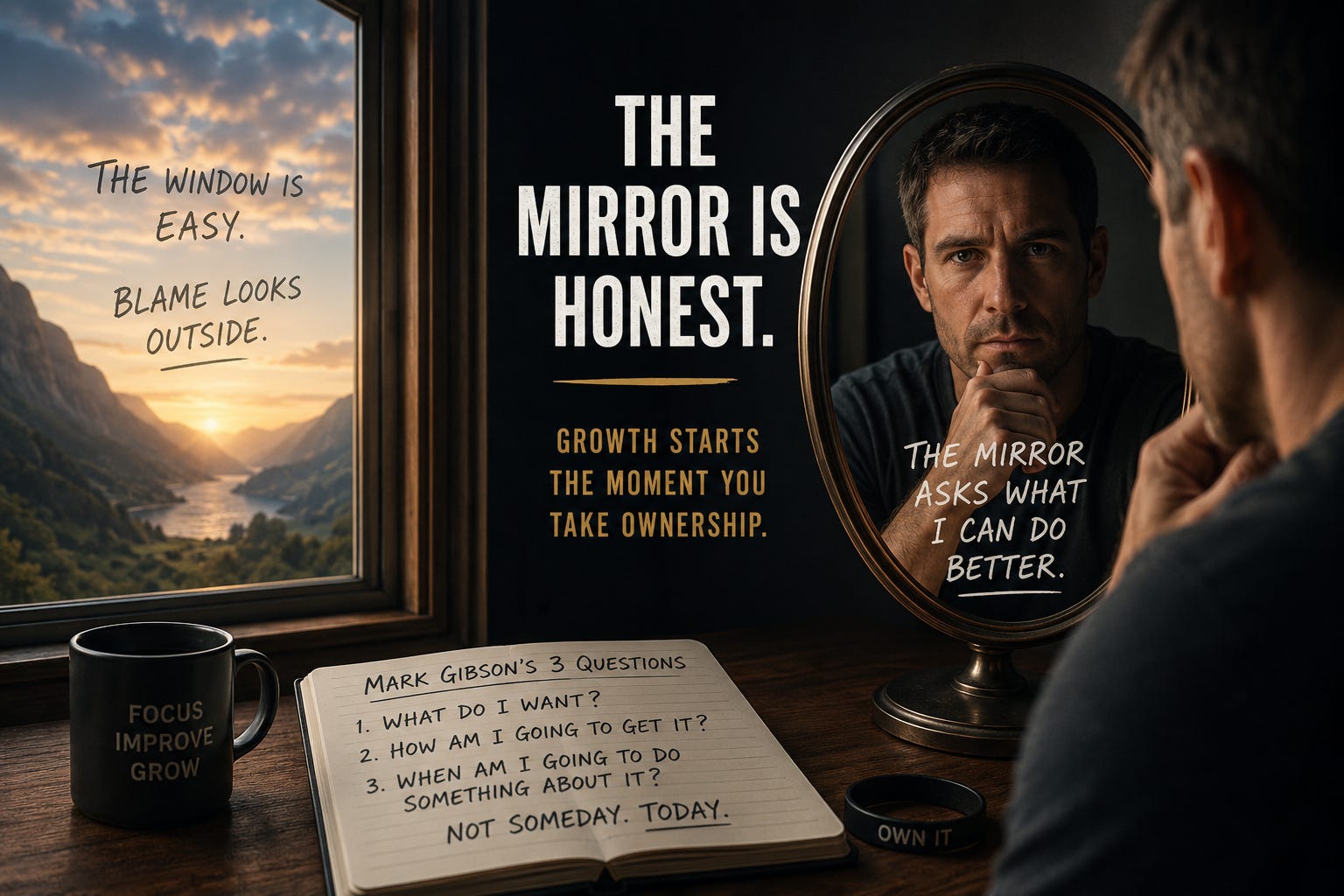
In Good to Great, author Jim Collins talks about the idea of windows and mirrors. When things go wrong, leaders look in the mirror first. When things go right, they look out the window and give credit to others.
Every day, whether we’re coaching a team, raising kids, building a business, trying to stay healthy, or just trying to become a little better than we were yesterday, we’re making a choice of looking in a mirror or through a window. The window is easy, but the mirror is what gives you the feedback you need.
The window tells you people are out to get me … nothing ever works out … I can’t catch a break … this is just meant to be.
The mirror asks you what can I do better … how did I contribute to this … what can I learn … what’s one thing I can control right now? Albeit harder, that is a much more productive conversation. It’s also the conversation that leads to something meaningful.
One of the best frameworks I’ve heard comes from Mark Gibson. He asks three simple questions: What do I want? How am I going to get it? And when am I going to do something about it?
Most people get stuck on the third question.
Because “someday” feels safe. We’ll start after the season, after vacation, after things calm down, after the new year, or after life becomes easier.
But improvement doesn’t happen in “someday.” It happens the moment someone decides: I’m going to take ownership of my life now. That’s how growth works. You have to believe improvement is possible before you’ll ever put in the effort required to pursue it.
And maybe that’s the real danger of always looking through the window. Blame feels protective in the moment, but over time it quietly convinces us we’re powerless.
The mirror does the opposite. The mirror reminds us we still have influence. Still have agency. Still have a choice. Still have room to grow.
That doesn’t mean beating yourself up or carrying guilt for everything that goes wrong. It means refusing to surrender the future to excuses.
One of my favorite lines from What’s Your Juice? says: “Your beliefs shape everything — your confidence, your performance, your potential.” That’s true in sports, leadership, parenting, relationships … in life. Because eventually, the stories we tell ourselves become the lives we live.
So maybe today is a good day to stop staring out the window.
Maybe today is the day to look in the mirror — not with shame, but with ownership. To ask: Do I want to improve? Do I believe I can improve? And if the answer is yes … when am I going to do something about it?
Hopefully today. Growth starts the moment we stop looking for someone else to blame.
“The man who complains about the way the ball bounces is likely the one who dropped it.”
— Lou Holtz
Connecting this quote to the story. Growth begins the moment we stop waiting for someone else to steer our lives and take ownership of the role we played in getting us to where we are today.
This week’s Chasing Influence tip: The fastest way to improve is to spend less time looking for blame and more time looking for responsibility.