
“We don’t see things as they are; we see them as we are.”
— Anaïs Nin
What’s Your Juice? Unlock the Energy that Transforms Performance, Fuels Purpose, and Ignites the People Around You is now available on Amazon! AND … look for What’s Your Juice? on Audible soon!
* This week’s message will be the first message in a short series about:
“Not Half as Beautiful as Painted”
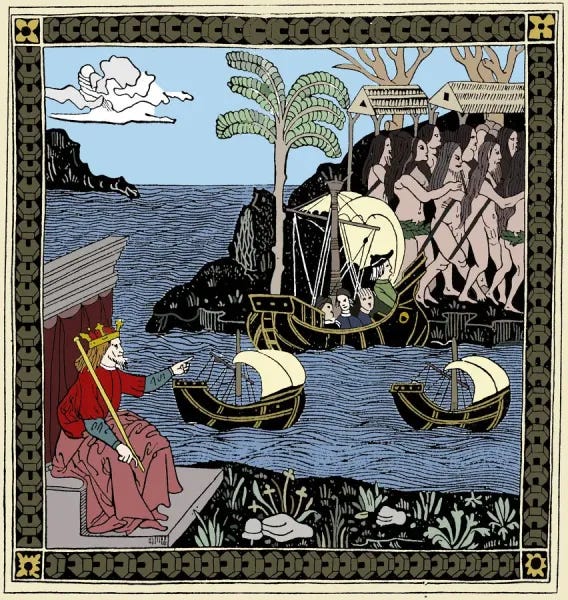
Last week I had the good fortune of staring out at the Caribbean, getting lost in my thoughts like countless others have for centuries. Five hundred and thirty-three years before me, Christopher Columbus did the very same thing.
On January 9, 1493, Columbus stood on the deck of his ship somewhere off the Caribbean coast and gazed at the turquoise waters. Only Columbus saw something different that day, prompting him to reach for his log.
Three figures broke the surface of the water. Sirenas, he called them. Mermaids!
Beautiful half-woman, half-fish mermaids were the stuff of sailor legend. They’d been whispered about in ports for thousands of years, passed from deck to deck and generation to generation. They existed long before maps were reliable or oceans were understood. Their stories carried farther than ships themselves, shaping what sailors expected to find long before they ever reached unknown waters.
Columbus watched them surface. He studied them carefully.
Then he wrote one of history’s most unintentionally honest letdowns: “They were not half as beautiful as they are painted.”
The creatures Columbus saw weren’t mermaids. Missing a keen eye for details … they were manatees. Gentle, gray, whiskered sea mammals drifting through warm Caribbean shallows.
Columbus was so locked into what he expected to see that when reality showed up, all he could feel was disappointment. The mermaids he’d dreamed of finding one day looked like floating potatoes. He couldn’t see these remarkable creatures for what they actually were. He could only see them as homely mermaids.
This is what we all do constantly. We walk into rooms, relationships, and opportunities carrying expectations. We’ve already written the script … how it should go, how people should respond, what success is supposed to look like.
Then reality shows up and it doesn’t match.
The team doesn’t perform the way we hoped for.
The opportunity doesn’t deliver what we dreamed of.
The person doesn’t turn out to be who we thought they’d be.
So we stand there, log in hand, writing our disappointment: “Not half as beautiful as painted.”
What we miss all too often is the new information, what is true, and what is beautiful. Manatees are incredible, gentle giants. They’ve thrived for millions of years, with their own beauty, their own purpose, and their own story.
Columbus missed all of that because he was too busy being disappointed about a mermaid that never existed.
The contributor mindset—the commitment to serve, to lead, to bring something meaningful—requires something Columbus couldn’t quite manage on that January morning.
It requires showing up for what is.
It doesn’t mean lowering your standards or abandoning your vision. It means bringing your best to what’s actually in front of you, not what you wish were there.
The coach who expected natural skill but got undeveloped athletes instead.
The leader who inherited a struggling team instead of a championship squad.
The parent whose child’s path looks nothing like the one they imagined.
Those moments reveal what your juice looks like.
Do you spend your energy mourning the mermaid, or do you show up fully for the manatee?
Columbus missed one of the great privileges of exploration—encountering something entirely new and letting it be what it is. Reality rewards our presence.
That same privilege shows up every Monday morning, in every hard conversation, and in every project that isn’t going according to plan.
The opportunity that looks different than what you pictured doesn’t need your resentment about what it’s not. It needs your energy for what it could be.
Like Columbus did, we all keep logs—mental or physical. We all write entries about the moments when life didn’t deliver what we expected. What are you writing?
“Not half as beautiful as expected”?
Or something more like “Not what I expected. But exactly what I needed to show up for.”
[This is the first post in a short series about lessons learned from “Not half as beautiful as painted.” What other lessons jump out to you from this Columbus story? Share this post with others and post your ideas in the comments section below!]
“You suffer not from the events in your life, but from your judgment about them.”
— Marcus Aurelius
Connecting this quote to the story. Columbus didn’t suffer from seeing manatees. He suffered from judging them against a mermaid fantasy, similar to when reality fails to meet the expectations we bring to the moment.
This week’s Chasing Influence tip: You can’t contribute meaningfully to a moment you’re busy resenting.
* Shout out to Rory Donovan for sparking this week’s ideas.