
“The beginning is the most important part of the work.”
— Plato
What’s Your Juice? Unlock the Energy that Transforms Performance, Fuels Purpose, and Ignites the People Around You is now available on Amazon!
How You Enter Matters More Than What You Plan
The tradition of a January 1st New Year's goes back over 2,000 years to Julius Caesar in 45 BCE. In ancient Rome, the New Year was about something different than goals, resolutions, productivity hacks, or bold declarations of what one was finally going to fix.
It was about who you would be.
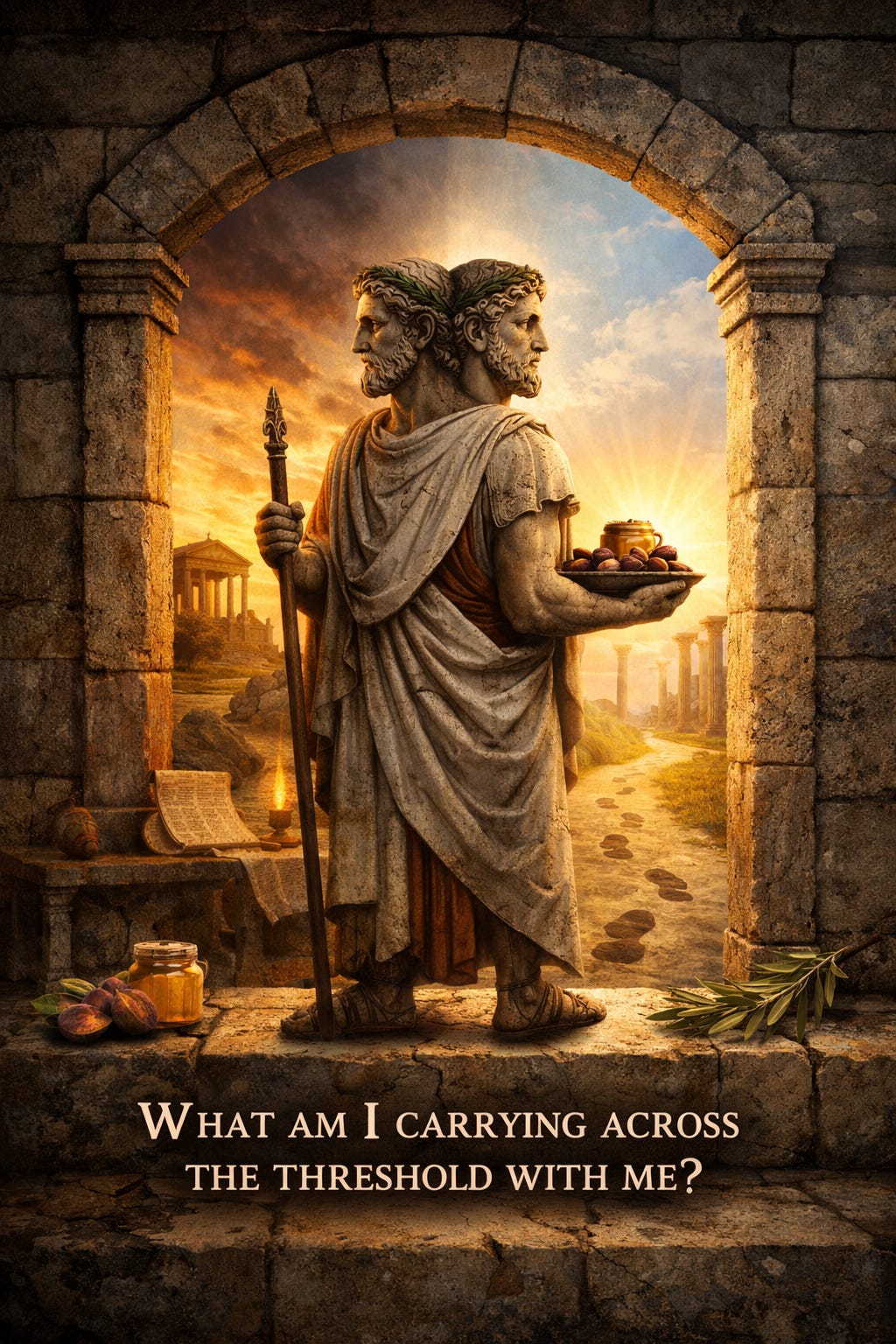
January takes its name from Janus, the god with two faces. One face looked backward, and the other looked forward. Janus didn't represent change through ambition. He represented change through awareness.
Ancient Romans believed the way you entered the year shaped everything that followed. It wasn’t what one wrote down or promised to do “after things slow down.” What mattered was the words, energy, actions, and presence on day one.
On New Year’s Day, Romans exchanged strenae, gifts of figs, dates, and honey. Sweet things to ensure a sweet year. They believed the generosity practiced on the first day of the year would become generosity practiced all year.
The first actions carried weight, and that momentum carried over. Newton told us this in 1687. While the Laws of Motion don’t explain human behavior, they seem to fit. Once you start moving, it tends to keep moving in the same direction.
Janus is a reminder that every beginning is a reckoning. You don’t get to look forward honestly unless you’re willing to look back clearly, something we often forget. You don’t flip a switch on January 1st and magically become different. You carry something across the threshold.
And whatever you carry tends to multiply. If you enter the year rushed, guarded, cynical, or already tired, no resolution can save you. If you enter it grounded, curious, generous, and present, momentum will take care of the rest.
The Romans practiced vota—vows at their temples on New Year’s Day. But these weren’t really about oneself. They were declarations of who they would be in service to others. “I will be the kind of person who...,” not “I will accomplish X.”
That distinction matters. Because you don’t become who you want to be later. You practice being that person from the first moment. It isn’t from “wanting,” it’s from “doing.”
The Romans weren’t naïve. They knew each new year would bring difficulties. They believed that how you entered the new year mattered.
Most will sprint past the doorway, dragging last year’s frustration, unfinished business, and self-criticism right along with them. Then they wonder why the new year feels heavy by February.
This year, pause at the threshold. Look back—not to judge, but to learn. Look forward—not to predict, but to choose.
Instead of asking, “What do I want to accomplish this year?” consider asking, “What kind of person am I choosing to be as I step forward?”
That question still works.
“We shape our habits, and thereafter our habits shape us.”
— John Dryden
Connecting this quote to the story. The way we enter this year (our words, actions, and presence) becomes a habit, and those early habits quietly shape who we become and how we influence everything that follows.
This week’s Chasing Influence tip: Great leadership begins with discovering what each person is uniquely built to do.