

“What am I really aiming at?”
— F. Scott Fitzgerald
Chasing Influence: Transformational Coaching to Build Champions for Life and What’s Your Juice? Unlock the Energy that Transforms Performance, Fuels Purpose, and Ignites the People Around You are available on Amazon and Audible!
Don’t Worry About Mosquitoes
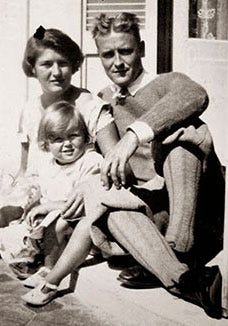
In August of 1933, F. Scott Fitzgerald sat down to write to his daughter at summer camp. The house he was renting was called La Paix, French for “peace,” which was a lot to ask of a house that summer. The Jazz Age he’d made famous had gone bust along with a world in turmoil and on the cusp of WWII, the novel he’d promised his publisher for the better part of a decade still wasn’t finished, and his wife, Zelda, was battling illness and the reason they were at this house in Baltimore.
Their daughter, Frances, was eleven and everybody called her Scottie. The letter reads like most letters to camp, right down to the teasing. In a P.S., after he’s already signed off, Fitzgerald warns that if she keeps calling him “Pappy,” he’ll start calling her “Egg” and make sure her friends hear about it!
In the middle of all that, he gets serious and writes her a list.
Worry about courage.
Worry about cleanliness.
Worry about efficiency.
Worry about horsemanship.
Don’t worry about popular opinion.
Don’t worry about dolls.
Don’t worry about the past.
Don’t worry about the future.
Don’t worry about growing up.
Don’t worry about anybody getting ahead of you.
Don’t worry about triumph.
Don’t worry about failure, unless it comes through your own fault.
Don’t worry about mosquitoes.
Don’t worry about flies.
Don’t worry about insects in general.
Don’t worry about parents.
Don’t worry about boys.
Don’t worry about disappointments.
Don’t worry about pleasures.
Don’t worry about satisfactions.
Think about: What am I really aiming at?
I first found this list in a book high up top of my bookshelf, numbered one through twenty-one. There are four things to worry about, sixteen things not to do, and one important question.
Most people I know run that ratio backward; I’d be lying if I said I’ve never been one of them. Now every win, loss, and ranking lives on a screen in our pocket, judged by people who answer to no one and forgive nothing. Fitzgerald told his eleven-year-old not to worry about any of it.
The athletic directors and coaches reading this might have laughed at “Don’t worry about parents.” I don’t think Fitzgerald was joking. He was writing during one of the hardest stretches of his marriage, from a house where his wife’s illness set the schedule. We’ve all coached someone like his daughter. She’s the player who checks the bleachers to see which parent showed up, or the kid who goes quiet at practice the week her family needs to change apartments. Somebody needs to tell her the grown-ups’ trouble isn’t hers to carry, and not every kid hears that at home.
The worry list is short and a little odd. Courage, cleanliness, efficiency, horsemanship? Courage is the conversation you’ve been putting off. Cleanliness is the dugout after a loss. Efficiency is a practice plan that respects the rest of a sixteen-year-old’s life. And every coach ought to have a horse they’re still learning to ride.
Then there’s the only line with an exception clause. Don’t worry about failure unless it comes through your own fault. It’s the difference between losing a job in a layoff and losing it because you never showed up on time. One is bad luck, the other one you should have seen coming.
Fitzgerald struggled to follow some of his own advice. He cared a great deal about what the critics thought, he watched his literary standing fade, and he drank too much. Tender Is the Night finally came out the next spring and didn’t sell the way he needed it to. Seven years after this letter, he died in Hollywood at forty-four, Gatsby was fifteen years behind him, and Scottie was nineteen.
The version in my book stops at “What am I really aiming at?” My own version of that letter has never been written down. I’ve delivered it to my kids for years, usually as they head out the door, and it runs four words: “Don’t do anything dumb.” They shrug it off as their dad being weird. I mean it every time. Fitzgerald gave his daughter four things to worry about, sixteen to let go of, and one big question to aim at. I’ve been giving mine a warning without the needed instructions.
Every coach should be able to relate. You go to the mound in a tight spot, tell your pitcher not to walk this guy, and you’ve just put ball four in his head. Tell him to attack the bottom of the zone, and he has somewhere to throw. Most of Fitzgerald’s don’ts aren’t rules. They’re permission to set those sixteen things down. The few things he wants, he names. And the biggest one, he doesn’t answer for her. Instead, he hands her the question.
If you had one page to send, the kind of letter that gets read on a bunk by flashlight, what would make your worry list? Fitzgerald got his down to four. The sixteen he told her to let go of are probably buzzing around your inbox right now like mosquitoes.
But before you write your list, answer Fitzgerald’s question for yourself.
What are you really aiming at? Do you know?
“It is not enough to be industrious; so are the ants. What are you industrious about?”
— Henry David Thoreau
Connecting this quote to the story. Working hard is important, but not enough by itself—we need to be intentional about what deserves our energy and clear about what we’re really aiming at.
This week’s Chasing Influence tip: Turn “don’t” into “do.” Instead of only telling people what to avoid, show them what success looks like.