

“The beginning is the most important part of any work.”
— Plato
Chasing Influence: Transformational Coaching to Build Champions for Life and What’s Your Juice? Unlock the Energy that Transforms Performance, Fuels Purpose, and Ignites the People Around You are available on Amazon and Audible!
Disturb the Dust
By the end of the day, the rolling trash cart was overflowing, and we weren’t close to finished.
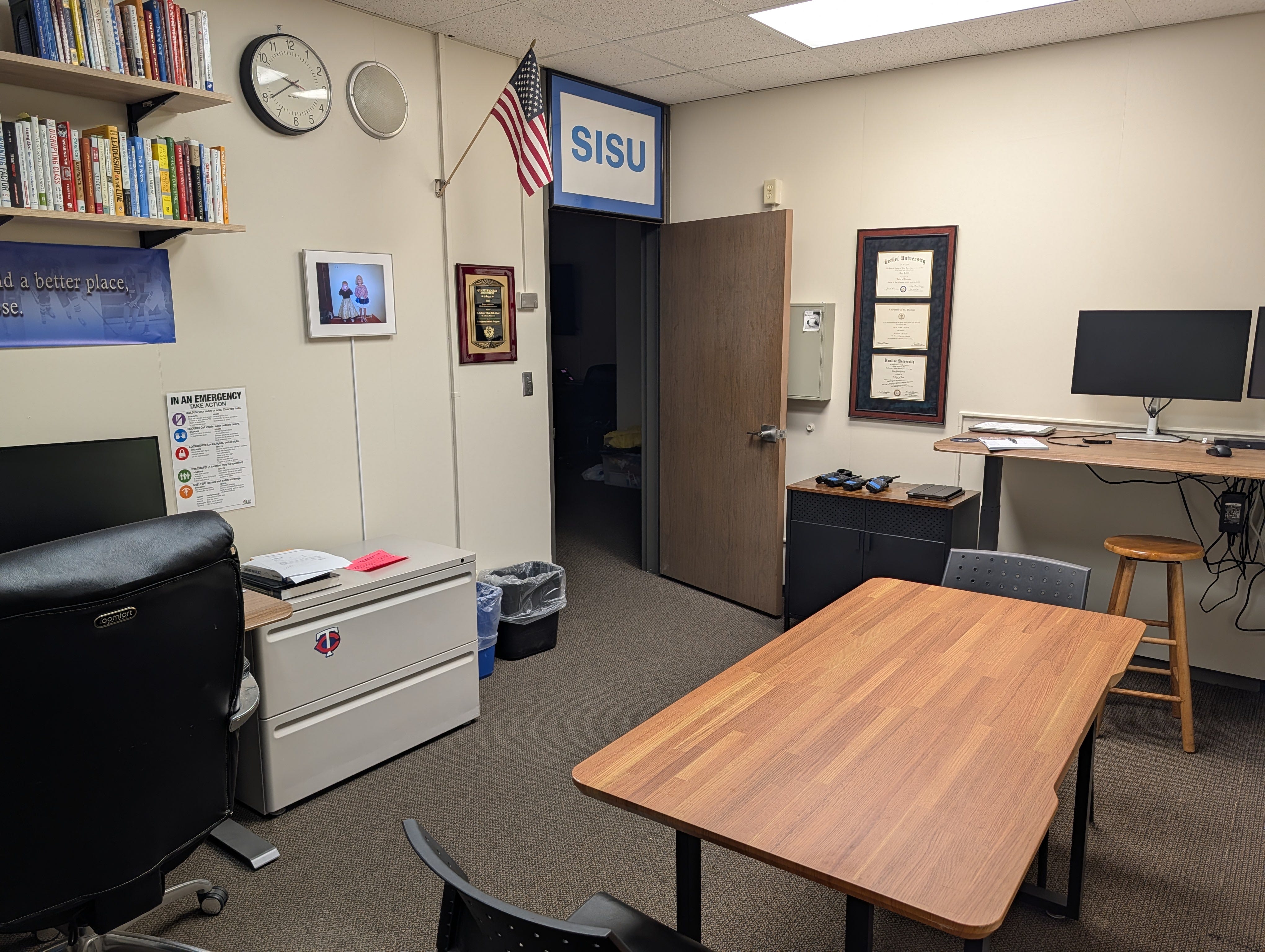
I had been calling it an “office optimization project,” which sounds fancier than it was. The budget covered a fresh coat of paint, a desk that raises for standing and lowers for sitting, a conference table, and a lot of cleaning. That meant letting go of items we had “saved” for years but didn’t need.
Our office had accumulated decades of “stuff.” Binders, files, supplies, and papers that were once important enough to keep. At some point, all of it became part of the office decor. Something sits on a shelf long enough and you stop seeing it.
The objective was practical. We wanted a space where our office staff could gather around a table and talk, and a place where someone could shut out the noise and dig deep into meaningful work. People and purpose, in the same space.
What I didn’t see coming was the unexpected lift. The room is now more alive. People started gathering at the new table. The office felt brighter, and so did I.
A hundred years ago, researchers outside Chicago discovered that same feeling.
In 1924, Western Electric’s Hawthorne Works in Cicero, Illinois, became the site of experiments examining whether changes in lighting affected worker productivity. The story that eventually became famous was almost too good: turn the lights up and productivity increased; turn them down and productivity increased again. The studies eventually expanded to things like breaks, working hours, and pay, and the idea became widely known as the Hawthorne effect—the possibility that people change their behavior simply because something about their environment, or the attention being paid to them, has changed.
The real story is more complicated. The original lighting data were long thought to have been lost until economists Steven Levitt and John List tracked down archived records and analyzed them decades later. They found that the famous every-change-produces-a-boost story wasn’t supported by the numbers. But they did find something subtler: output tended to be higher when experiments were underway than when nothing was being changed. Maybe the lighting itself wasn’t the important part. Maybe being shaken out of the ordinary was.
That’s what happened in our office. Something changed, and the change made us pay attention again.
Psychologists have a related idea called the fresh start effect. Researchers found that people are more likely to pursue their goals after temporal landmarks, such as a new year, a birthday, a new semester, or even a Monday. Those markers draw a line between who we were and who we might be next. A calendar gives us a few of those lines each year. A can of paint lets us create one ourselves.
The boost doesn’t last on its own, though. Paint fades. The new-desk feeling lasts as long as the new-car smell. Most can relate to the exhaustion of change for its own sake, when the latest initiative shows up because somebody decided it was time for something new. What keeps a refresh from fading is purpose. Our conference table mattered because we wanted people talking to each other. Clearing the shelves made physical room, and it made some mental space too. The space now reflects what we want to happen inside it.
Every coach knows the dog days of a season. You’ve practiced in the same gym so long your players can tell you which floorboards squeak. The work is still good, but the juice is missing. On a day like that, we know what a small change can do. Let the seniors take charge for the first twenty minutes. Flip the practice plan upside down. Practice somewhere different. Suddenly, the energy comes back. The same principle applies to our work and our lives.
The thing needing a refresh might not be a room. It might be the staff meeting that has used the same agenda in the same place for so long nobody remembers why. It might be a morning routine, a family tradition, or a relationship that deserves more intentional attention. It might be a process everyone follows because “that’s how we do it” became reason enough somewhere along the way.
We rarely need to blow things up and start over. Most of the time we just need to disturb the dust long enough to see what’s been sitting in front of us.
What could you refresh today that will make a lasting impact tomorrow?
“Things do not change; we change.”
— Henry David Thoreau
Connecting this quote to the story. The office refresh didn’t only change the space - it changed the experience and brought energy to the work happening inside the space.
This week’s Chasing Influence tip: Change gets attention; purpose makes it last.